


Inspect quality.
Secure production.
Fast and flexible on-site
We deploy qualified employees at short notice and as needed directly to customers, suppliers, and OEMs.
Broad range of testing
From simple visual inspections to complex functional tests, we offer a wide range of testing procedures for a variety of components.
Reliable and decisive
Clear specifications in detailed work instructions ensure reliable decisions, uniform inspections, and dependable results.
Digital data collection & reporting
All results and evaluations are transparently available at any time in our customer portal.
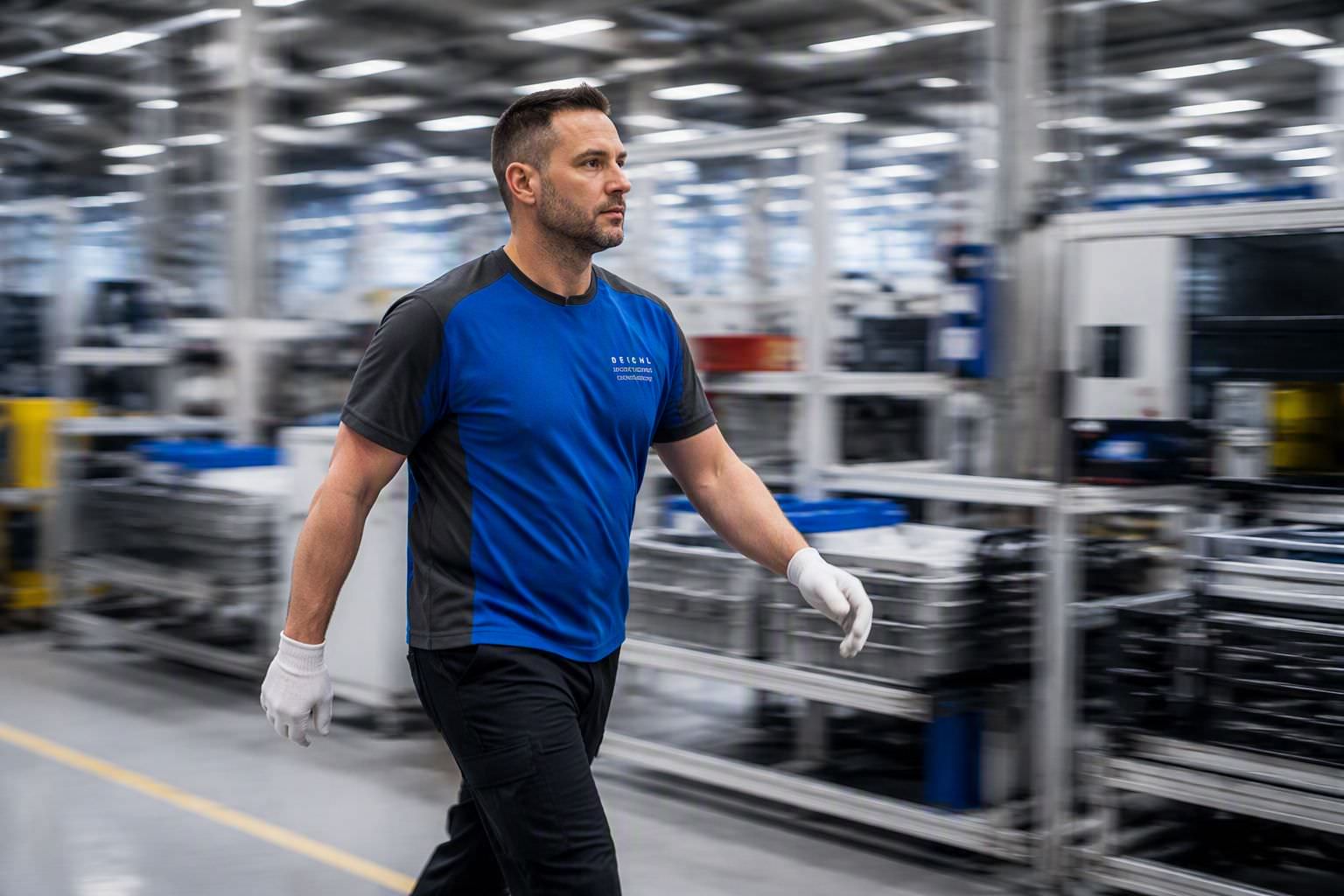

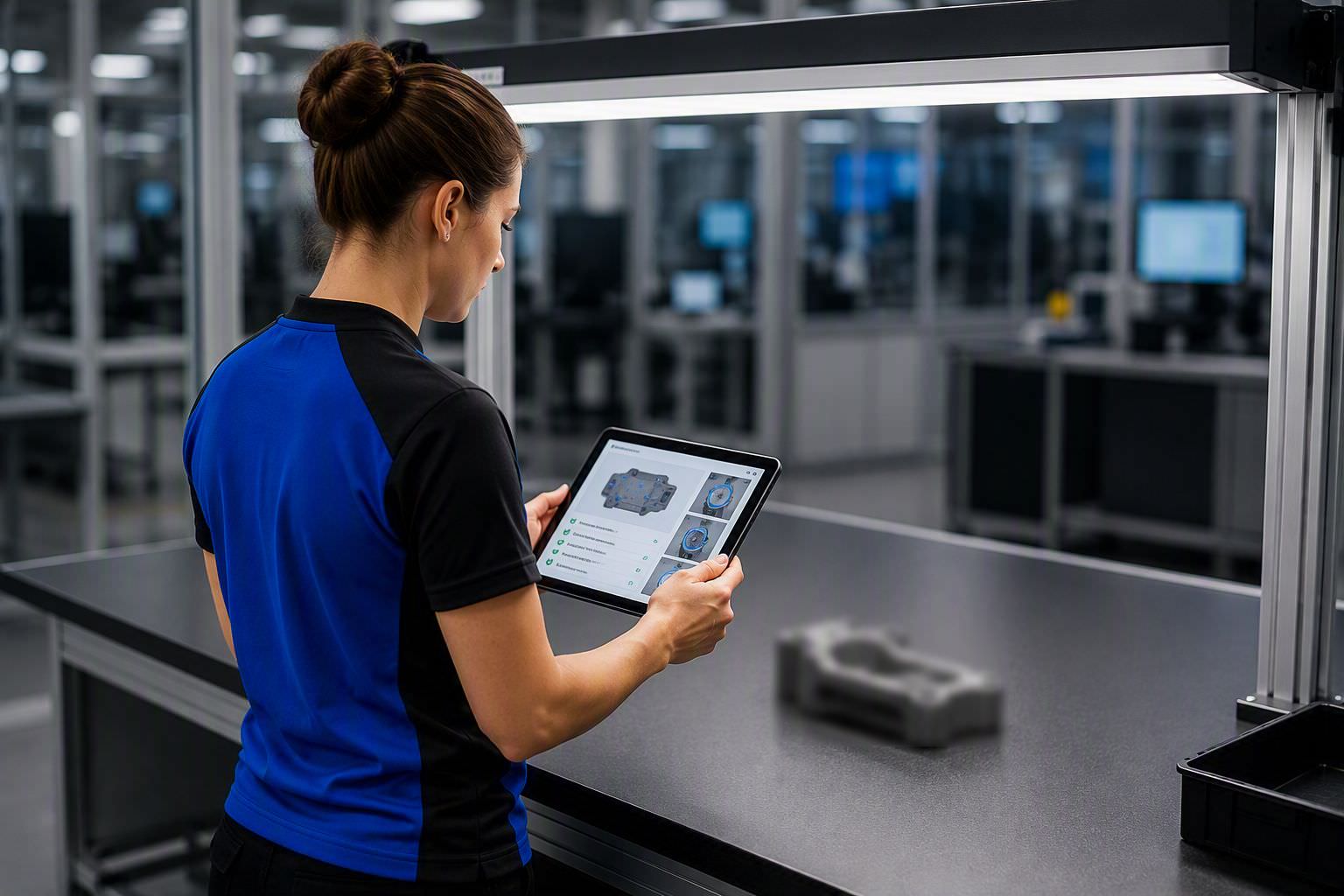

The images on this website were created using artificial intelligence (AI).
Competent and solution-oriented quality inspection: at the OEM or at your site, according to your specifications - for guaranteed product quality and stable production processes.
Visual inspection (optical)
Testing according to specifications/defect catalog, clear separation of OK/NOK.
Measurement-supported testing
Quality inspection with measuring aids according to your specifications and traceable characteristics.
Functional check
The functional test is carried out according to defined criteria.
Documentation (digital)
Digital, meaningful documentation of work and processing status.
Quality inspection at Deichl
Quality inspections are a sensitive area of responsibility and require individual and customized solutions. For nearly 35 years, Nikolaus Deichl GmbH has been supporting OEMs, suppliers, and companies in the automotive industry and other manufacturing sectors in securing their quality requirements.
Our experienced employees inspect a wide variety of parts and components every day. In doing so, we combine many years of practical experience with defined processes, documented workflows, and transparent reporting.
The range of services includes, for example, line support directly at the OEM, where our qualified employees accompany production directly on the line and ensure through continuous inspections that defective parts are reliably rejected or reworked.
In addition, we offer quality firewalls as temporary or permanent inspection stations for 100% control of critical characteristics. These serve to safeguard delivery capability, product quality, and customer satisfaction through the consistent removal of non-compliant parts.
Furthermore, we operate as an approved quality service provider for software updates/flashing processes with ODIS. With OEM-compliant equipment, we perform software updates/flashing processes on vehicle components directly on-site and support our customers in the secure implementation of technical adjustments.
As an ISO 9001 certified company, structured processes and a continuous improvement approach are at the heart of our work. Additionally, the TISAX® label underlines our responsible handling of sensitive information and customer data.
What you gain (Benefits)
- Less risk on the line: only OK parts proceed
-
Clear separation and traceable decisions
-
Transparency at all times regarding quantities, status, and anomalies
-
Flexibly scalable: inspection scope, staff size, and duration of deployment as required
- Security through experience
Line support directly at the OEM
Our qualified employees accompany ongoing production directly at the vehicle manufacturer's production line. They inspect components based on the specified quality requirements and identify deviations immediately in the production process. Defective parts are reliably sorted out or reworked according to the agreed specifications.
Through continuous inspection directly on the line, anomalies can be detected early and the necessary measures initiated. In this way, we support your quality assurance where the parts are processed and help to avoid the further processing of defective components.
Quality Firewall
A quality firewall creates an additional control stage to safeguard your components. At temporary or permanently established inspection stations, we check critical characteristics 100%. The basis is the defined inspection criteria and quality requirements. Parts that do not meet these specifications are reliably sorted out.
The inspection station can be used at short notice to safeguard against quality deviations or permanently as a component of your quality assurance. This reduces the risk of defective parts reaching downstream production steps or the customer. In this way, we support your delivery capability, safeguard product quality, and contribute to the satisfaction of your customers.
Software updates & flashing with ODIS
As an approved quality service provider, we handle software updates and flashing processes on vehicle components directly on-site. We use the ODIS diagnostic system and OEM-compliant equipment. The work is carried out according to the specifications of the respective vehicle manufacturer and the requirements of the agreed order.
During flashing, the intended software version is transferred to the relevant component. This allows required software adjustments to be implemented in a targeted manner and components to be brought to the specified version. By performing this on-site, we support the processing of affected components directly at their place of use or inspection.
Overview of the four modules
Secure quality
Only flawless components enter the production process - defective parts are reliably identified and sorted out.
Achieve goals
Our quality inspections help to maintain quality standards, reduce ppm values, and reliably achieve production targets.
Maintain standards
Work instructions are created in advance for all inspections in close coordination with the customer - this is how we create process reliability.
Minimize risks
Through consistent separation of OK and NOK components, we prevent quality problems, production interruptions, and consequential costs.
How an order proceeds
1) Clarification:
component to be tested, defect pattern, inspection scope, quantity, start date, storage locations, line action required
2) Creation of work instructions:
specifications, characteristics/drawing, defect catalog, sample part, boundary samples, work equipment, workflow, labeling, approval of work instructions, and employee briefing
3) Start-up:
short pilot, then approval for volume
4) Execution:
on-site inspection, part labeling, ongoing monitoring, digital data collection
5) Completion:
result + daily documentation / summary
When this is particularly important
- When the production process is at risk
-
When large quantities must be reliably inspected
-
When production targets must be met
-
When quality standards must be maintained
- When ppm values are increasing