


Optimizing Incoming Goods Inspection: Less Effort, More Security
26. May 2026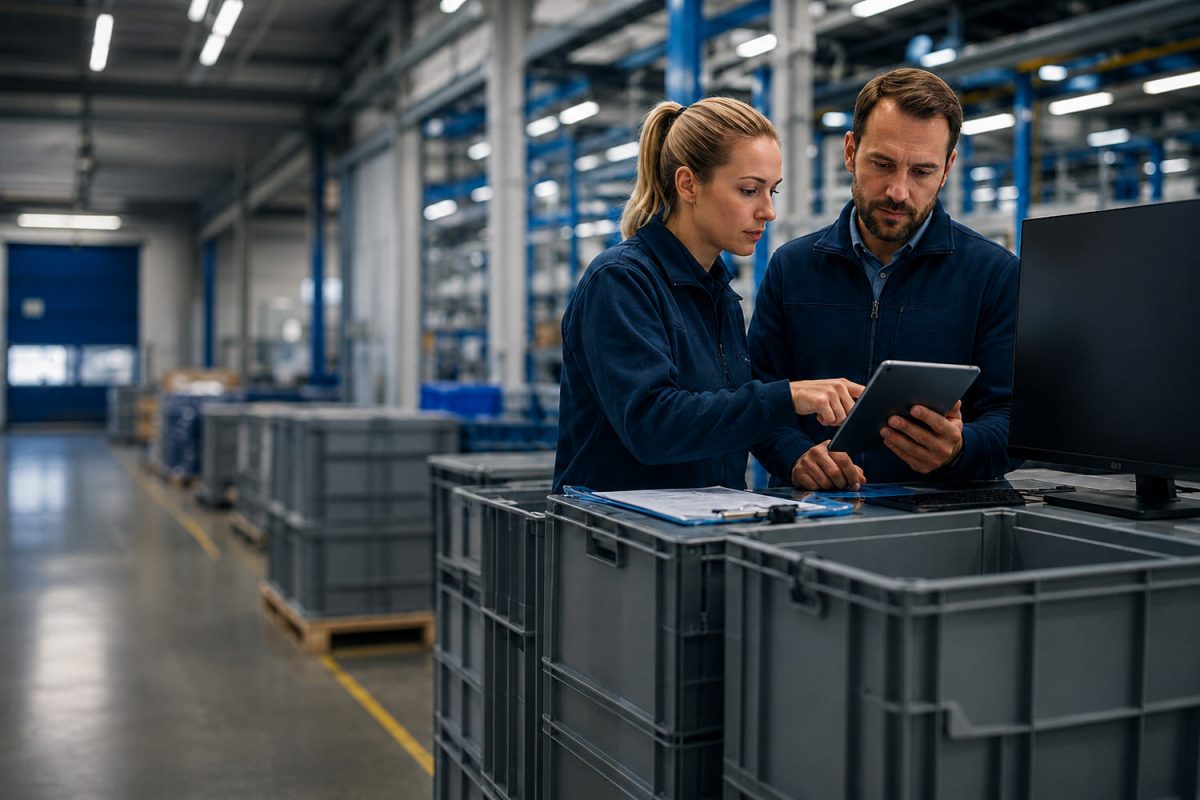
The images on this website were created using artificial intelligence (AI).
When a quality incident occurs in production, it is rarely just about the defect itself. Usually, a much larger question immediately arises: How can delivery still be secured?
This is precisely where it is decided whether a quality deviation is handled in a controlled manner or whether it escalates into a larger standstill. As soon as material is blocked, parts are missing, goods need rework, or customers are waiting for feedback, pressure increases significantly in a short time.
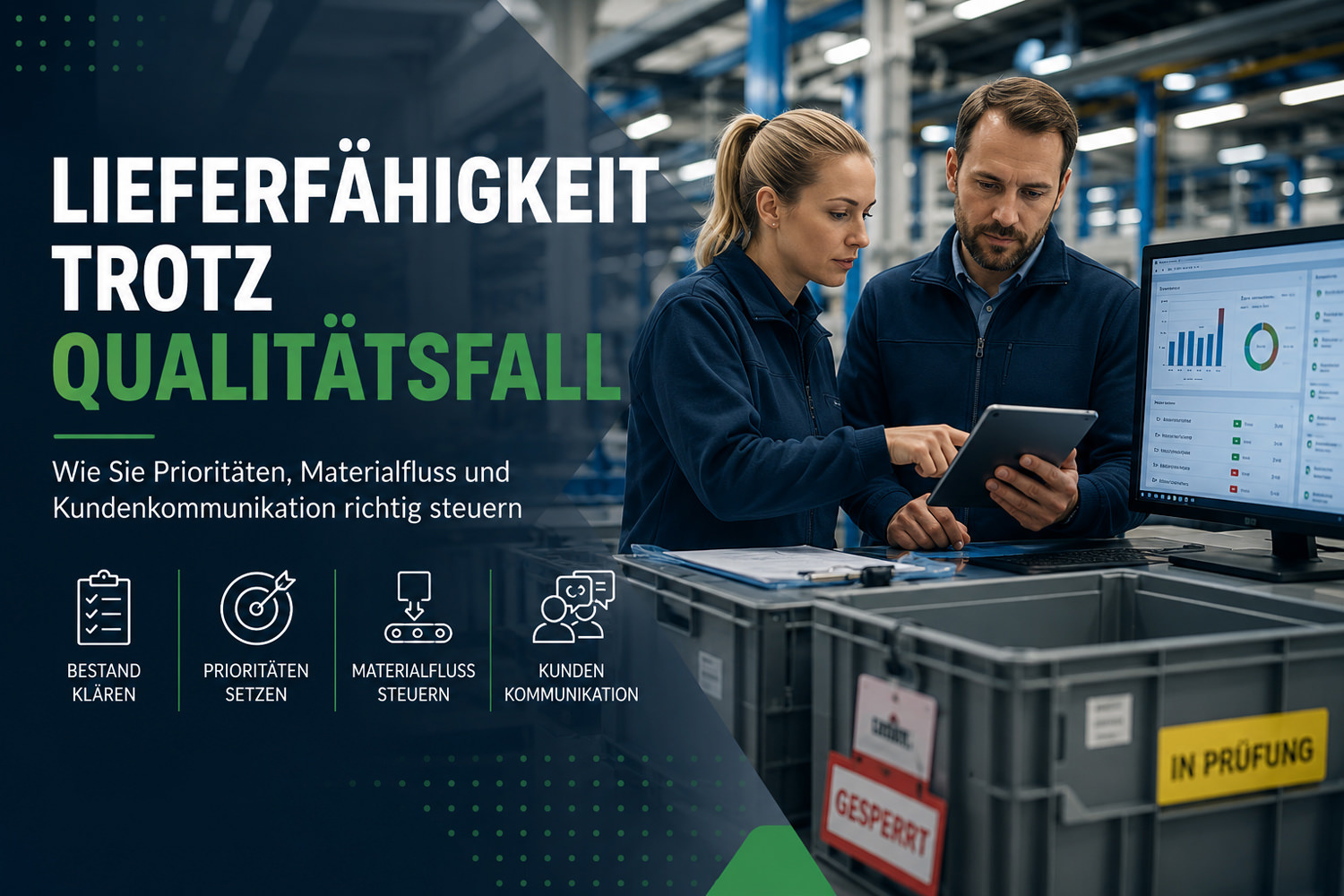
Delivery capability despite a quality incident does not mean ignoring risks or releasing goods prematurely. It means controlling quality and material flow simultaneously. This requires clear priorities, accurate inventory visibility, fast decisions, and reliable communication.
Why a Quality Incident Quickly Jeopardizes Delivery Capability
A quality incident often begins with a specific defect pattern: a dimension does not fit, a surface is damaged, an assembly is incomplete, a delivery deviates from requirements, or a customer reports an anomaly. At this moment, material is blocked, inspected, or placed in quarantine.
This is technically correct. At the same time, it immediately creates an operational problem: Which parts may still be used? Which inventories are affected? Which orders depend on them? Which delivery dates are critical? And how quickly can inspection, sorting, or rework be performed?
If these questions are not answered quickly, uncertainty arises. Production waits for material. Logistics does not know what may be moved. Purchasing clarifies with suppliers. Quality assurance examines the defect. The customer asks about delivery dates. Without clear control, many departments then work in parallel, but not necessarily in the same direction.
This is precisely why delivery capability in a quality incident requires a structured process.
The First Step: Clearly Identify Affected Inventory
Before discussing deadlines, rework, or special releases, the affected inventory must be clarified. Without inventory clarity, there is no reliable decision.
The important question is: What is actually affected?
This includes not only the parts that are currently noticed at the line. Goods in receiving, in the warehouse, in production, in shipping, at the customer, or at the supplier may also be affected. Equally important is containment by batch, lot, production period, delivery date, line, tool, or shift.
The better this containment succeeds, the less needs to be blocked or inspected across the board. This saves time, reduces costs, and protects delivery capability.
In practice, the rule is: It is better to block somewhat more broadly at the beginning and then quickly narrow down precisely, than to start too narrowly and later discover that additional material has already passed through.
Setting Priorities: Not Every Part Is Equally Critical
In a quality incident, time is short. Therefore, it must be decided early which goods are inspected, sorted, or reworked first. Work must not be done solely in order of receipt. What matters is which parts are truly critical for delivery capability.
Priority is generally given to parts that are directly linked to customer deliveries, are needed in production in the short term, or are responsible for a bottleneck. Equally important are components for which a release can realistically be achieved quickly. Sometimes it is more sensible to release a smaller quantity securely first in order to enable a delivery, rather than processing the entire inventory simultaneously.
However, this prioritization must remain technically sound. Critical characteristics, safety-relevant components, or unclear defect patterns must not be "waved through" due to schedule pressure. Delivery capability must never mean diluting quality. It arises through targeted control, not through shortcuts.
Controlling Material Flow, Not Just Blocking Goods
A block alone does not solve a problem. It only prevents affected material from continuing uncontrolled. After that, a clear decision is needed on how to stabilize the material flow again.
This can be done through sorting operations, rework, replacement deliveries, partial releases, special inspections, or a combination of several measures. It is important that these measures do not run in isolation. They must be coordinated with production, logistics, quality assurance, and customer requirements.
An example: If goods are sorted, it must be clear what quantity can realistically be inspected per hour, which defect criteria apply, how conforming goods are marked, and when they may be returned to the process. If rework is necessary, an approved work instruction and an inspection after rework are required. If replacement material is available, it must be decided whether it is faster than sorting or rework.
Delivery capability therefore does not arise from activism. It arises from sequencing: What is processed first? What quantity will be available when? What may be shipped when?
Properly Sequencing Sorting and Rework
Sorting operations and rework are often the fastest ways to make material available again in a quality incident. At the same time, they can cause enormous costs if poorly controlled.
A sorting operation requires clear inspection criteria, trained inspectors, separate material paths, and accurate documentation. Otherwise, there is a risk that conforming and nonconforming parts are mixed or that the result is not reliable later.
Rework additionally requires clear boundaries. It must be clearly defined what may be reworked, which tools are used, which characteristics are subsequently inspected, and who issues the release. Without these standards, rework quickly becomes improvised repair. This may help in the short term, but trigger new complaints in the long term.
When sorting and rework are properly sequenced, a reliable plan emerges. Then it can be stated which quantity will be inspected or released by when. This information is precisely what is critical for realistically controlling delivery capability.
Transparency Through Daily Reporting
In a quality incident, it is not enough that "work is being done." All stakeholders must know how far the measure has progressed and what that means for the next deliveries.
Daily reporting is a critical lever here. It creates a daily, unified view of the current status: inspected quantity, conforming quantity, nonconforming quantity, remaining inventory, main defect patterns, rework progress, available goods, open decisions, and expected completion.
This transparency reduces coordination effort. Production, logistics, purchasing, quality assurance, and the customer work on the basis of the same figures. This makes decisions faster and more reliable.
Without reporting, parallel realities emerge. Production calculates with a different quantity than logistics. The customer receives an optimistic statement that must later be corrected. Quality assurance knows that the defect is not yet stable, but material flow is already pushing for release.
This is precisely why daily reporting in a quality incident is not an additional burden, but a control instrument.
Customer Communication: Reliable, Not Speculative
When a quality incident affects delivery capability, the customer wants one thing above all: reliable information. What is affected? What quantities are blocked? What goods are available? When can delivery resume? And how is it ensured that defective parts do not slip through?
The mistake in communication is often becoming too specific too early. Under pressure, deadlines are stated even though inventory, inspection scope, or defect pattern are not yet fully clarified. Later, these statements must be corrected. This damages trust.
Better is clear, factual communication: What do we know for certain? What is currently being inspected? When will the next reliable status be available? What measures are already underway? What quantity is currently released?
Customer communication in a quality incident does not need to be dramatic. It needs to be structured. Those who deliver clear status updates reduce follow-up questions and demonstrate that the incident is being managed professionally.
Common Mistakes That Further Jeopardize Delivery Capability
Many quality incidents escalate not because of the original defect, but because of poor control afterward. It is particularly critical when the affected inventory is not cleanly contained. Then too much is blocked or too little. Both cost time and trust.
Another mistake is lack of prioritization. If all inventories are processed simultaneously, but no critical delivery dates are considered, resources are deployed incorrectly. Unclear inspection criteria also cause delays, because results must be discussed or re-inspected.
Also dangerous are verbal releases, missing labeling, unclear responsibilities, and reporting without a reliable data basis. In total, these points lead to a situation where no one can reliably say what is available and what is not.
This is precisely what jeopardizes delivery capability.
Ensuring Delivery Capability Means: Bringing Quality and Speed Together
A quality incident does not automatically have to lead to a delivery stop. But it requires a clear structure. Only when inventory, risk, priorities, measures, and communication are cleanly controlled can delivery capability be secured despite a quality incident.
This is not about being faster at any cost. It is about making the right decisions quickly. Which goods are blocked? Which goods can be inspected? Which quantity is needed first? Which rework is permissible? What information can be reliably given to the customer?
When these questions are clearly answered, material flow remains controllable. Quality is secured without unnecessarily blocking production.
Conclusion: Delivery Capability in a Quality Incident Requires Structure
Delivery capability despite a quality incident does not arise by chance. It arises through clear processes, rapid inventory clarification, targeted prioritization, accurate sorting or rework, and communication based on facts.
Companies that master these workflows not only react faster. They also reduce follow-up costs, avoid unnecessary blocks, and strengthen their customers' trust.
Deichl supports companies precisely in these situations: when quality deviations must be quickly controlled, inventories secured, sorting or rework measures implemented, and reliable status information provided. So that quality and delivery capability work together even in critical moments.